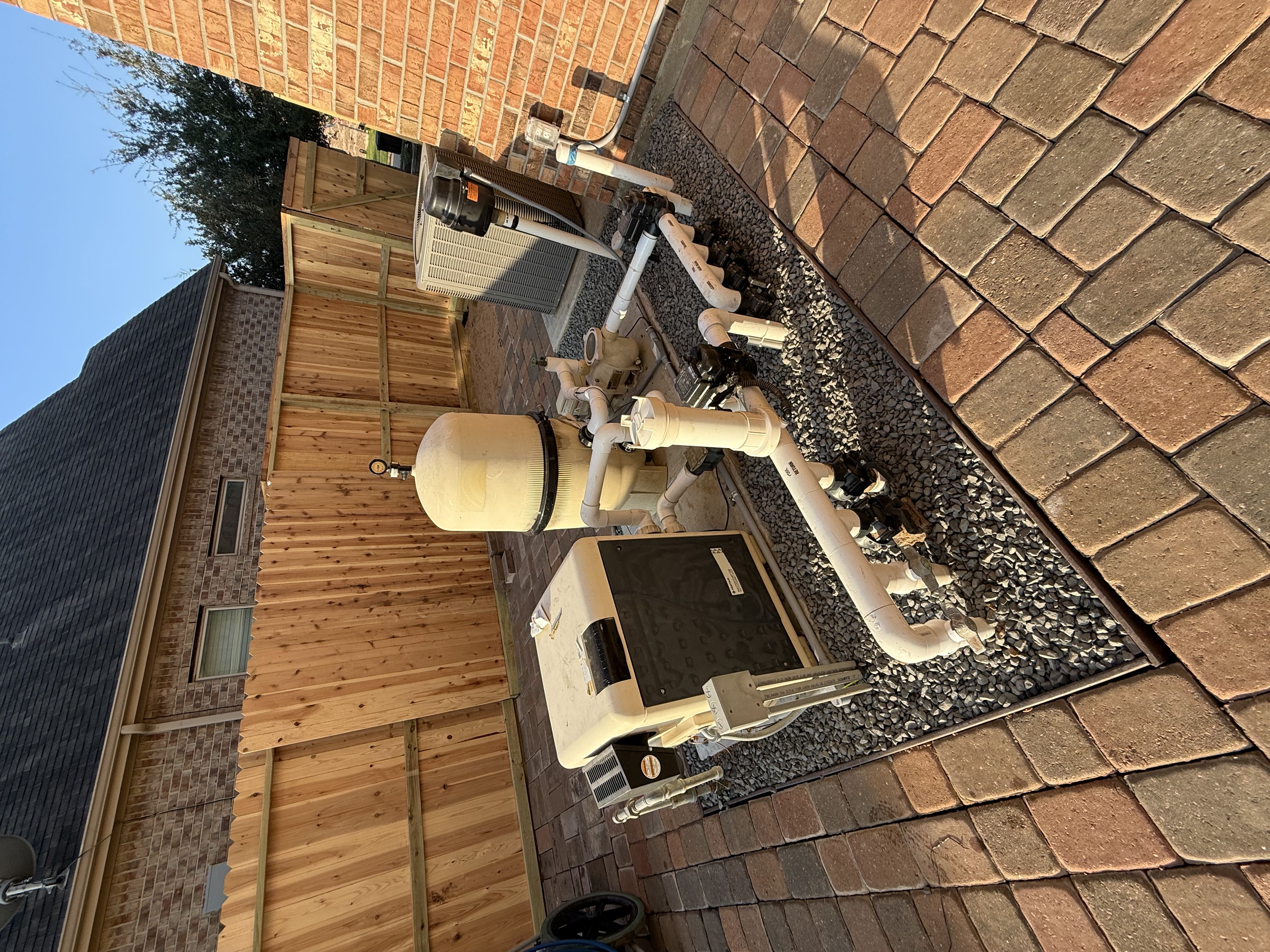
Pools in Fort Bend County work hard. Long swim seasons, heavy pollen in spring, aggressive storms in summer, and the occasional hard freeze all leave a mark on equipment. Heaters feel it more than most. They run at high temperatures, depend on precise water chemistry, and rely on solid airflow or gas supply. When something in that chain slips, comfort suffers first, then reliability, and finally the equipment itself.
At Texas Pool Butlers, we service and replace heaters throughout Fulshear and Richmond, plus nearby Katy and the west side of Houston. We see patterns across neighborhoods like Cross Creek Ranch, Harvest Green, Aliana, Lakes of Bella Terra, and Pecan Grove. The details below come from that day to day work, not a manufacturer brochure. If your pool won’t warm up, or the heater seems to start and stop in a loop, there is usually a traceable reason and a responsible fix.
Why heaters struggle locally
Humidity and heat make Houston famous, but heaters typically run when the air is cool and damp. In November through March, we see nighttime lows between the mid 40s and high 30s, with swings that play havoc on sensors and defrost cycles. The same period brings oak leaves and pine needles that choke heater cabinets and coil fins. On top of that, a few recent winters brought freeze events that cracked pressure switches and warped manifolds.
Water chemistry in our region also trends toward scale. Many homes in Fulshear and Richmond draw from water with calcium hardness between 200 and 350 ppm. Heat accelerates scaling, so a poorly balanced pool can plate calcium inside a copper or cupronickel heat exchanger in weeks, not months. That layer acts like an insulating blanket, forcing longer run times and raising gas or electricity costs. Eventually the exchanger overheats, trips a high limit, or ruptures.
Finally, utility and property upgrades cause surprises. Homeowners add standby generators, outdoor kitchens, or tankless water heaters. The gas system works on paper, then the pool heater tries to fire and starves for pressure. Common story: everything tested fine until the first cold front when multiple appliances run together. Diagnosing those interactions is part of modern pool service in Houston.
The most common pool heater failures we fix
Gas-fired heaters and electric heat pumps fail in different ways, yet they share one requirement: steady water flow. Modern variable speed pumps can run at very low RPM to save energy. That is good, until the flow switch or pressure switch inside the heater does not see enough movement. We often find a brand new heater that “won’t light,” and the fix is to bring the pump to 2,200 to 2,800 RPM while the heater runs, then fine tune. Each plumbing pad is unique, so we set RPM by measured flow and heater specifications rather than guesswork.
On gas heaters, we frequently encounter:
- Ignition lockouts. The heater clicks, tries to light, and shuts down. Culprits include weak igniters, dirty flame sensors, spider webs in the burner tray, or marginal gas pressure. High limit trips. Scale in the exchanger or a bypass stuck closed can spike outlet temperatures. The unit engages, hits the limit, cools, then tries again in a short cycle. Sooting and poor combustion. Dark residue at the exhaust or a smell of incomplete burn hints at blocked venting, incorrect manifold pressure, or restricted air intake. Left untreated, sooting ruins exchangers and clogs passages. Leaks at headers and manifolds. Gaskets dry out sooner when chemistry oscillates. A drip becomes a steady leak that corrodes cabinet bases and nearby unions. Rodent and insect damage. Field mice like warm cabinets. Fire ants fill control boxes. We open a surprising number of heaters to find wires chewed clean through.
On heat pumps, patterns differ:
- Icing and short defrost cycles. In cool, humid nights, evaporator coils can frost over. If the defrost sensor reads wrong or airflow is weak, the unit spends too much time thawing and not enough heating. Low refrigerant charge. Tiny leaks at flare connections or Schrader cores develop over years. A heat pump still runs, but delivers lukewarm water and long cycle times. Capacitor and fan failures. The fan stops or runs slowly, head pressure spikes, and the unit trips on safety. This often starts as an intermittent fault, showing up only on windy or damp evenings. Flow switch faults. Just like on gas heaters, a borderline slow pump or dirty filter confuses the internal flow sensor.
A note on automation: Integrated systems in Katy and Richmond, often from Pentair, Jandy, or Hayward, help heaters talk to pumps and valves. They also add a layer of settings to check. We commonly find a spa heat call locked to 80 degrees even though the homeowner believes it is set to 102. Or the system thinks the spa is closed due to a sensor misread. When Texas Pool Butlers diagnoses heater issues, we always review the automation logic along with the hardware.
Simple checks before you schedule service
When a heater throws an error or refuses to start, a few safe checks can save you a trip charge. If you are comfortable, try the following. Stop if anything gas related looks or smells wrong, or if electronics are exposed to water.
- Verify flow. Clean the skimmer basket, pump basket, and ensure the filter pressure is normal for your system. If you run a variable speed pump, increase RPM for 10 to 15 minutes and try again. Confirm the set point. Double check whether the system is calling for pool heat or spa heat, and that the set temperature is above the current water temperature. Check valves. Make sure suction and return valves are positioned for the body you want to heat. If you use a spillover spa, confirm the spa is isolated when you want only the spa heated. Look and listen. For gas units, look for debris around the vent and listen for repeated clicking or a rapid fan start and stop. For heat pumps, confirm the fan is running and the coil is not iced over. Power cycle once. Turn the heater off at the control, wait a full minute, then restart. For heat pumps, you can also flip the breaker off and on once. If a breaker immediately trips again, leave it off and call.
If any of these steps change the behavior, tell your technician. That context often halves the diagnostic time.
How we approach heater diagnostics
Experience speeds repairs. Our techs carry manometers for gas pressure, clamp meters for live amperage, infrared thermometers for exchanger delta T, and test strips for quick water balance checks. A typical gas heater call in Fulshear goes like this. We verify flow and filter condition, review automation settings, then put the heater into service mode. We check inlet and outlet temperatures to see if heat transfer happens at all. If the unit tries to light and fails, we test ignition sequence, flame sense microamps, and manifold pressure both static and under load. Underload gas pressure tells the truth. A system can show 7 to 8 inches water column at rest, then sag below 4.5 under demand, which is often where problems appear. If we suspect a supply issue, we ask what other gas appliances run at the same time and whether a standby generator was added.
On heat pumps, we start with airflow. We inspect the evaporator coil for matting from cottonwood, ragweed, and dust. We check fan starter capacitors and measure refrigerant pressures and superheat or subcool when service ports and ambient conditions allow. If the unit ices quickly, we compare sensor readings with actual coil temperature and test the defrost board. Many heat pumps have an ambient lockout near the low 40s. On a windy 38 degree night in Richmond, the unit may not engage at all, by design. Part of our job is setting expectations and offering alternatives like a hybrid setup or a solar cover to reduce thermal loss.
Gas heater specifics for the Houston area
Gas supply in newer Fulshear subdivisions often uses flexible CSST inside the home with a rigid line to the equipment pad. The line was sized for a typical appliance mix at construction, for example one pool heater at 400,000 BTU, a pair of furnaces, and a cooktop. Years later, the homeowner adds a whole home generator that needs 250,000 to 350,000 BTU at full load. On a cold night, both systems call at once. The result is poor pool heater ignition, flame rollout sensors tripping, or sooting. You might notice that the heater lights fine at noon and fails at 7 pm. We solve this with measured data, then coordinate with a licensed plumber to upsize the line or create a dedicated branch. It is not uncommon to replace a 3/4 inch run with 1 inch or even 1 1/4 inch over a short distance to the pad.
Ventilation and setbacks matter too. Gas heaters need clear air in front and a safe path for exhaust. We see landscaping beds built tight against cabinets and even covers draped over exhaust flues. A restricted intake leads to incomplete combustion and carbon monoxide risk. Manufacturers call for 24 to 36 inches of clearance on most sides, and more above the exhaust. We reset the pad area and reroute drip edges or gutters if roof runoff dumps onto the cabinet. That one change can add years of life.
Inside the heater, the heat exchanger tells the story of water chemistry. Scale looks like white chalk on the water side and forces higher temperatures inside the tubes. Over time the exchanger bows and leaks at the headers. Aggressive water on the other hand, especially with low alkalinity and pH, eats cupronickel. We have pulled exchangers that look sandblasted after a season of low pH under a heavy salt chlorination cycle. We carry field test kits for pH, alkalinity, calcium, and salt, then back that with lab analysis for commercial accounts. For homes, we tune chemistry within a small range that avoids both scale and corrosion, guided by the Langelier Saturation Index.
Heat pump realities in our climate
Heat pumps earn their keep between March and May and again in September through early November, when nights are cool and days are mild. They move heat efficiently under those conditions, often delivering 5 to 7 units of heat for every unit of electricity used. In a damp 45 degree mist, performance drops. A heat pump may still be the right call, especially if you mainly extend the season for kids’ lessons or prefer low operating cost. If you want to reliably hit 102 degrees in a spa on a windy 40 degree night though, a gas heater still wins. Many homeowners in Katy and Richmond choose a hybrid: a heat pump for most of the year with a small gas heater for spa duty.
Airflow is the lifeblood of a heat pump. We recommend keeping at least three feet of space around the cabinet and five feet above, with no overhead obstructions. Cottonwood fluff in early summer can instantly mat a coil. We gently clean those fins, never with a pressure washer, because bent fins choke airflow. If we see a pattern of icing, we test fan motor amperage and capacitors. If refrigerant charge looks suspect, we locate leaks at fittings or coils, repair, replace the filter drier, evacuate, and weigh in the factory charge. When available, we update boards and sensors to correct nuisance lockouts.
Automation, sensors, and variable speed pumps
Heaters and pumps do not think, they follow inputs. The water temperature sensor may sit in a warm pipe run rather than in the main body, which confuses the reading. A flow switch might sit just downstream of a 90 degree elbow that creates turbulence, causing chatter at certain RPM. The chlorinator could be plumbed on the wrong side of the heater, pushing concentrated chlorine gas back into the exchanger when the system shuts down. We find and fix these details.
Variable speed pumps save real money, but their lowest speed is not a universal setting. Every heater lists a minimum flow rate, typically between 30 and 40 GPM. We check actual flow with a meter or by calculating from pump curves and head loss. Then we program the automation so that a heat call automatically raises pump RPM while heat is active, and returns to an efficient speed when heat is not called. That one change prevents many intermittent heater faults.
Repair or replace: how we decide with you
We look at four factors: age, repair cost relative to replacement, parts availability, and operating goals. Gas heaters in our market last about 7 to 12 years when maintained. Heat pumps run longer on average, often 10 to 15 years, assuming no compressor failure. If a heater is over 8 years old and needs a major part like a heat exchanger or a compressor, repair often costs more than half of a new unit. At that point, we discuss replacement. If parts are backordered, that also tilts the decision.
Efficiency plays a role. Modern gas heaters with polymer headers and improved ignition still burn the same energy per degree raised, but upgraded controls and better heat exchangers can save 5 to 10 percent compared to older models. Heat pumps continue to improve their coefficient of performance. If you swim frequently in shoulder seasons, those gains become meaningful. We also consider how you use your pool. If you host big spa nights, on demand heat matters more than seasonal efficiency.
A few case notes from the field
One Fulshear client in Cross Creek Ranch had a 400k BTU gas heater that lit erratically. We measured manifold pressure at 3.3 inches water column on light off, climbing to only 3.8 under steady burn. The spec calls for 4.0 to 10.5. A standby generator had been added the year prior. When the furnace, generator exercise cycle, and pool heater aligned, the gas line starved. We worked with a licensed plumber to upsize a 60 foot run from 3/4 inch to 1 inch and added a dedicated tee for the heater. After that change, ignition was crisp and repeatable, and the flame signal stabilized.
In Richmond, a heat pump for a lap pool iced over nightly. The coil was clean, the fan ran well, and sensors checked out. We eventually traced the issue to airflow recirculation. A privacy wall and hedges created a dead zone. Exhausted cold air looped back into the intake. We rotated the unit 90 degrees, added a simple baffle, and trimmed hedges behind the equipment pad. Problem solved, and the client picked up roughly 3 degrees per hour of heating rate improvement.
In Katy, a homeowner called for pool repair katy tx after a freeze cracked several unions and the heater’s pressure switch. We rebuilt the pad plumbing with unions positioned for easy winterization and added a freeze protection schedule to the automation. The following winter, the system ran uninterrupted through two nights in the high 20s.
Replacement done right
When we replace a heater, we do more than swap a box. Sizing comes first. Bigger is not always better. For a 15,000 gallon pool, a 250k BTU gas heater may be more than enough if you mostly maintain temperature, while a 400k unit is sensible if you want to quickly raise a spa. Heat pumps are https://texaspoolbutlers.com/llms/ sized by output at a given ambient, not just nominal tonnage. We match the unit to your desired rise per hour in realistic local conditions.
Gas work requires attention to line sizing, valves, sediment traps, regulators, and ventilation. We coordinate permits when needed and pressure test the line before light off. On the water side, we confirm the heater sits downstream of the filter and upstream of any chlorinator or salt cell, with a check valve as manufacturer guidance dictates. For heat pumps, we add a proper condensate drain to keep the pad dry. Electrical connections adhere to code, including GFCI protection where required.
We bring the system online, purge air, and watch the first full heat cycle. Then we set automation, program compatible RPM schedules, and document set points with the homeowner. Finally, we label valve positions for pool, spa, and spillover modes. A clean handoff avoids the typical post install confusion.
What repairs and replacements cost in our area
Service fees vary with distance and complexity, but many heater diagnostics in Fulshear and Richmond start between 125 and 195. Small repairs, like a pressure switch, temperature sensor, or capacitor, often land in the 150 to 400 range parts and labor. Igniters and flame sensors commonly run 200 to 450. More involved burner tray cleanings and gas valve replacements range from 350 to 900 depending on model. Heat exchangers and compressors are major repairs, usually 1,200 to 2,500, and that is where we often discuss replacement if the unit is older.
New gas heater installations typically fall between 3,200 and 5,800 installed for standard 250k to 400k BTU models, with line upgrades adding cost when needed. Heat pumps often range from 4,000 to 6,500 installed, depending on capacity and brand. Timelines run from same day for stock parts to a week or two if a specific model or a permit is required. We keep common models and repair components on hand to minimize downtime.
Water chemistry, scale, and the long game
Heaters are unforgiving when chemistry swings. High pH and high calcium hardness create scale inside exchangers, especially on salt pools when the cell overproduces and the water warms. Low alkalinity and low pH corrode metals. The sweet spot is not a guessing game, it is a narrow window determined by the LSI. We monitor pH, alkalinity, calcium, stabilizer, salt, and temperature together. In practical terms, that often means a pH around 7.5 to 7.7, alkalinity 70 to 90, and calcium hardness 250 to 350, adjusted to season.
Many homeowners outsource weekly care, which is wise. If you use a pool cleaning service houston or prefer a complete plan, we include heater friendly targets in our houston pool maintenance service. Automation can help by adjusting chlorinator output with temperature. We also recommend a scale inhibitor when conditions trend toward deposition and a proper spring clean of heater internals where warranted.
Gas or heat pump: a quick comparison for our climate
- Speed to heat. Gas wins for on demand spa heating and rapid recovery after a cold front. Operating cost. Heat pumps cost less to run in mild weather, especially for maintaining a steady pool temperature. Cold weather performance. Gas remains consistent in the 40s. Heat pump output drops and may lock out near the low 40s. Noise and placement. Heat pumps move a lot of air and need space. Gas units are quieter in steady state but need clear venting. Utility constraints. Gas needs adequate line size and pressure. Heat pumps need proper electrical service and clean airflow.
We install both systems throughout west Houston and can walk through a hybrid approach if you want the best of each.
Why Texas Pool Butlers
We pair technical depth with practical advice, and we do it locally. Our team handles pool heater repair and pool heater replacement daily across Fulshear, Richmond, and Katy. We also support pool repair katy and pool equipment repair houston projects where heaters interact with pumps, filters, automation, and salt systems. If you need more than heater work, our crews cover pool pump repair houston, automation upgrades, and leak checks as part of broader pool services houston.
For homeowners who prefer hands off care, our houston pool cleaning service keeps chemistry on target and equipment inspected, so problems show up on our schedule, not on your Saturday morning. We work alongside several pool cleaning services houston and offer in house houston pool cleaning plans as needed. Whether you want a weekly pool maintenance service houston or seasonal houston pool cleaning services, one point of contact helps your equipment last and your water stay inviting.
A final word on readiness
Two or three small steps make heaters in Fort Bend County last longer. Keep the pad tidy and airflow clear. Balance water with the heater in mind. Confirm automation schedules raise pump RPM during heat calls. And when you add major gas or electric loads to your property, invite your pool professional to review the impact on the equipment pad. That kind of planning avoids winter surprises.
If your pool is slow to warm, or if your heater cycles, throws codes, or makes you second guess the settings, Texas Pool Butlers can sort it out. We serve Fulshear, Richmond, Katy, and the west side with diagnostics, repairs, and replacements that respect your time and budget. A pool is supposed to be easy to enjoy. We make the equipment match that promise.